
The "Social Mode" Advantage: Why Big Brands Need to Be Where People Eat
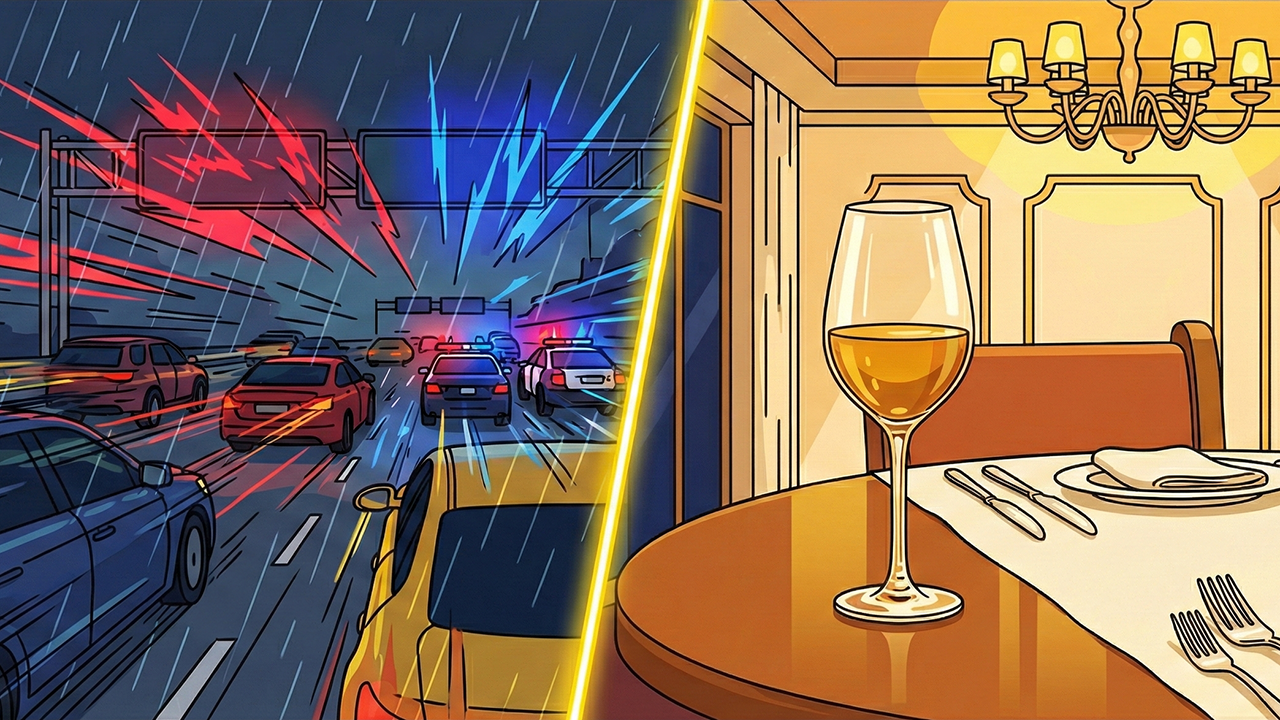
When people are dining with family, their guard is down. It is the perfect moment for Emotional Branding.
In the high-speed, high-noise world of modern advertising, the industry has become dangerously obsessed with the concept of "Reach."
Marketing Directors and Media Buyers spend billions of dollars annually calculating how many cars pass a billboard on Highway 1 during rush hour. We obsess over how many thousands of eyes scroll past a banner ad on a mobile app. We optimize for "Impressions," treating human attention like a commodity that can be bought in bulk.
But in this relentless race for volume, we rarely ask the most critical question regarding ROI: What is the mental state of the person seeing the ad?
The most sophisticated creative agency in the world, producing the most beautiful 4K video, will fail if the audience has their cognitive shields up. Reach without resonance is just noise.
At Totemian, we believe that where an ad is seen is just as important as how it is seen. The environment dictates the reception. This is why smart capital—from luxury automotive brands to high-end real estate developers—is shifting budgets away from the chaos of transit and toward the sanctuary of the "Social Mode."
The Neuroscience of Attention: "Commute Mode" vs. "Social Mode"
To understand why traditional advertising is losing its edge, we have to stop looking at spreadsheets and start looking at neuro-marketing. The human brain is an efficient biological filter; it is evolutionarily designed to ignore 99% of external stimuli to focus on what matters for survival.
Commute Mode: The Survival Instinct
Consider the mindset of a driver on the Lions Gate Bridge or a commuter on the SkyTrain. They are in what neuroscientists call "Commute Mode."
In this state, the brain is high-alert. It is occupied with navigation, safety, traffic patterns, and time management. Biologically, cortisol (the stress hormone) levels are elevated. In this state, the Reticular Activating System (RAS)—the brain's gatekeeper—actively deletes peripheral information.
Your highway billboard is literally being erased by the viewer's brain to make room for the car merging in the left lane. The brain classifies the ad as "visual clutter" that does not aid in immediate survival or navigation. You aren't just fighting competitors for attention; you are fighting a survival instinct.
Social Mode: The Porous Brain
Now, contrast that with the dining experience. When a person enters a high-end restaurant, passes the host stand, and sits down at a table, the brain shifts gears entirely.
They enter the domain of the Parasympathetic Nervous System—often called the "Rest and Digest" state. The "danger" signals of the workday turn off. The focus shifts to connection, pleasure, sensory experience, and storytelling.
In this state, the brain becomes porous. Cortisol levels drop, dopamine rises, and the "Ad Resistance" that we build up like armor throughout the day begins to crumble. We don't catch people when they are running away; we catch them when they have arrived.
The "Halo Effect" and the Evolutionary Logic of Trust
There is a primal, evolutionary connection between feeding and trust. Historically, eating was a vulnerable activity; humans only did it in environments where they felt safe and among people they trusted.

When you place a brand message in a dining environment, you benefit from the "Halo Effect." This is a cognitive bias where our overall impression of something (a high-end meal) influences how we feel about its surroundings (your brand).
The positive emotions associated with aged wine, warm lighting, savory aromas, and family laughter are subconsciously transferred to the brand on the screen. The brand becomes associated with pleasure rather than interruption.
For Big Brands in FMCG (Fast-Moving Consumer Goods), Automotive, or Finance, this is a strategic goldmine:
- Specs vs. Story: If you sell a luxury car on a billboard, you are selling specs (horsepower, price) to a distracted driver who just wants to get home. If you sell that car on a Brandboard in a luxury restaurant, you are selling a lifestyle to a dreamer who is imagining their next success.
- Non-Intrusive Presence: Unlike a YouTube Pre-Roll ad that stops you from watching content, a digital screen in a restaurant is ambient. It doesn't demand attention; it earns it. You aren't interrupting the conversation; you are becoming part of the premium scenery.
The Science of Context: Why Recall Rates Skyrocket
This isn't just marketing theory; it is backed by the physics of attention. Studies in Contextual Advertising consistently show that ads viewed in positive, relevant environments have significantly higher recall rates.
The secret formula is Dwell Time + Frequency + Visual Integrity.
The Power of Dwell Time
In a typical transit or digital environment, "view time" is measured in seconds (often milliseconds). In a restaurant, the average dwell time is between 45 to 90 minutes.
This allows for a marketing strategy that is impossible elsewhere: Low-Frequency Repetition.
If a digital loop is 2 minutes long, and a customer sits for 60 minutes, they will be exposed to your brand message roughly 30 times. Because the exposure is peripheral and non-aggressive, it doesn't cause "Ad Fatigue." Instead, it creates deep-seated memory encoding. This passive repetition, combined with a relaxed mental state, boosts ad recall by up to 65% compared to traditional OOH.

Brand Safety: The Hardware Factor
However, context is only as good as the presentation. Nothing damages a luxury brand faster than a pixelated ad on a cheap, dusty horizontal TV hanging above a bar. That screams "Sports Pub," not "Premium Partner."
To maintain Brand Safety for our luxury clients, Totemian uses exclusively vertical, high-definition Brandboards.
- Vertical Orientation: This mimics the smartphone experience and premium magazine layouts. It feels modern, personal, and high-end.
- Digital Art: These are designed to function as art pieces, not television sets. By treating the hardware as architectural decor, we ensure your creative is presented with the dignity and clarity it deserves.
Leveraging Vancouver’s Persian Dining Scene: A Cultural Sanctuary
The Totemian network dominates the Persian dining cluster in North and West Vancouver. To the uninitiated, this might look like a "niche market." To those who know the flow of capital in Vancouver, this is a cultural phenomenon.
In Persian culture, dining is the primary social activity. It is the epicenter of life. These restaurants serve as modern-day community halls where multi-generational families gather for hours.

These tables are often occupied by the community’s decision-makers:
- The Grandparents: Holders of generational wealth and capital.
- The Parents: Active business owners, doctors, and developers.
- The Children: Trendsetters and influencers.
When you place your brand here, you are entering the "Inner Circle." You are not just advertising to individuals; you are advertising to families who make collective decisions about real estate, vehicles, and investments over dinner.
You are accessing a community when they are:
- Happiest: Enjoying cultural comfort food.
- Wealthiest: Actively spending disposable income on high-ticket dining.
- Most Open: Surrounded by trusted peers and family.
You aren't just buying "impressions"; you are buying a seat at the table.
Don’t Let Your Brand Look "Cheap"
In the race for reach, don't sacrifice your brand's soul. For global brands, the quality of the screen and the vibe of the room are just as important as the number of people inside it.
Stop fighting the survival instinct on the highway. Stop paying for "skipped" views on YouTube. Start joining the conversation where it matters.
Experience the Totemian difference and discover why brands like BMW, Lexus, and top-tier local developers trust their image to our screens.